Laminated Glass Upgrades & Replacement Daytona Beach
Laminated glazing uses bonded layers that differ from ordinary monolithic glass. Explore appropriate uses, assembly compatibility and the limits of replacing glazing in an existing window or door system.
Request a Window & Door Estimate
Share a few details about the windows, doors, shutters or repair work you're considering. We will use your request to understand the project and preferred contact method.
Laminated Glass Options in Daytona Beach
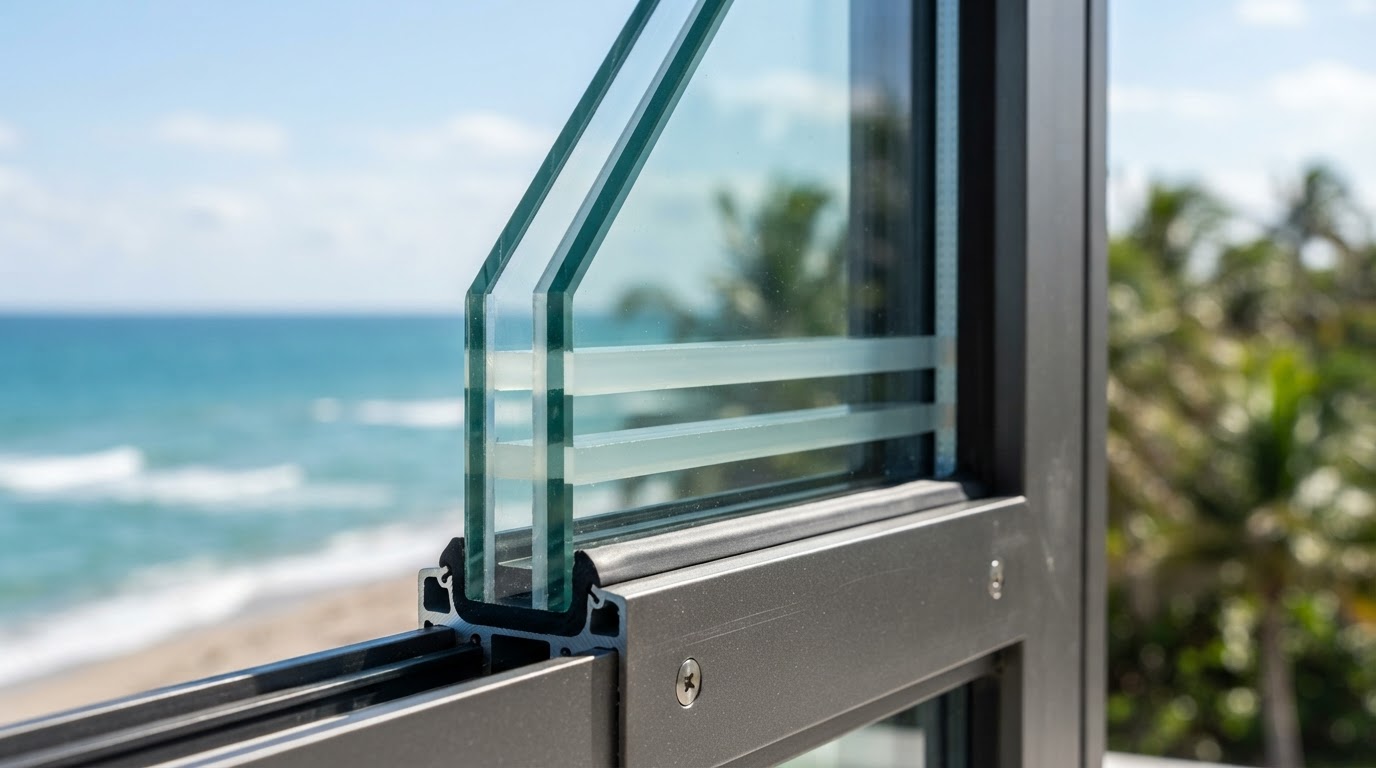
Laminated glass is a glazing type made of two or more lites bonded together by an interlayer, which holds the glass together if a lite breaks. It differs from ordinary monolithic glass and from tempered glass, and it is one component — but not the only component — of an impact-rated window or door assembly. Understanding what laminated glass does and does not do is the first step in evaluating an upgrade.
For Daytona Beach properties, the useful questions are about why laminated glass is being considered, whether the existing frame can retain a laminated unit, and whether a glass-only upgrade can deliver the performance the owner expects. This page focuses on laminated glazing; for glass-only replacement see window glass replacement, and for a complete impact assembly see impact window installation.
How Laminated Glass Construction Works
Laminated glass is built by bonding two or more lites of glass to a plastic interlayer, typically polyvinyl butyral (PVB) or ethylene-vinyl acetate (EVA), under heat and pressure. The interlayer is what distinguishes laminated glass from monolithic or tempered glass: if a lite breaks, the interlayer holds the fragments in place rather than letting them scatter. This is the same basic construction used in impact-rated window assemblies, but laminated glass alone is not the same as a tested impact assembly.
The interlayer type, the glass thickness, the number of lites and the bonding method all vary between products, and the documented performance depends on the specific configuration. Avoid assuming a particular interlayer specification or protection percentage without the product's documentation.
- Laminated glass bonds two or more lites to a plastic interlayer under heat and pressure.
- The interlayer holds fragments in place if a lite breaks, unlike monolithic glass.
- Interlayer type, glass thickness and bonding method vary between products.
- Documented performance depends on the specific configuration, not the glass type alone.
Laminated Glass vs Approved Impact Window Assemblies
The most important distinction on this page is between laminated glass and an approved impact window assembly. An impact-rated window is a complete tested system — glass, interlayer, frame, glazing method and anchorage evaluated together. Laminated glass is one component of that system. Replacing ordinary glass with laminated glass in an existing frame does not, by itself, create an impact-rated opening.
Interlayers, Glazing Configurations and Documented Performance
The interlayer and glazing configuration define what the glass itself can do — hold together on breakage, reduce some sound transmission, block some UV. But the frame, the glazing retention method and the anchorage define what the opening can do under wind and debris loads. A laminated unit in a frame not designed to retain it, or anchored in a way not tested with it, is not the same as an approved assembly.
Any performance claim — sound reduction, UV blocking, impact resistance — should be tied to the product's documented test data for the specific configuration, not to a general property of laminated glass.
Existing Frames, Glazing Retention and Compatibility
A glass-only upgrade depends on the existing frame being able to retain the laminated unit. Laminated glass is thicker and heavier than ordinary monolithic glass, and not every frame or glazing method can accept it. The frame condition, the glazing bead or tape, and the sash design all affect whether a glass-only upgrade is feasible.
Even where a laminated unit fits, the result is a laminated-glazed window, not necessarily an impact-rated assembly. If the goal is an impact-rated opening, the relevant path is usually a complete impact window installation rather than a glass-only upgrade.
Glass-Only Upgrades vs Complete Window Replacement
The decision between a glass-only laminated upgrade and complete window replacement depends on the goal and the existing assembly. If the goal is a specific glazing property — sound or UV reduction — and the frame is sound, a glass-only upgrade may be worth evaluating. If the goal is an impact-rated opening, the relevant path is usually a complete impact window installation, because the rating depends on the full assembly, not the glass alone.
A qualified assessment should confirm what the existing frame can accept and what the goal actually requires. Do not assume a glass-only upgrade confers code compliance, insurance savings, soundproofing, UV performance or warranty retention — each of those depends on the specific product and configuration.
- If the goal is a specific glazing property and the frame is sound, a glass-only upgrade may be worth evaluating.
- If the goal is an impact-rated opening, complete impact window installation is usually the path.
- The rating depends on the full assembly, not the glass alone.
- Do not assume a glass-only upgrade confers code compliance, insurance savings or warranty retention.
Laminated Glass Planning Near Daytona Beach
Planning a laminated glass project starts with the goal — sound reduction, UV blocking, or impact performance — and the existing assembly. Helpful details include the window or door type, the current glazing, the frame material and condition, and whether the product is already impact-rated. Photos of the existing glazing and frame are useful.
Share these details — the project city or ZIP, the window or door type, the goal of the upgrade, and the existing glazing and frame — so the scope can be evaluated for a project-specific estimate. Be specific about the goal, since the right path for sound reduction can differ from the right path for impact performance.
- Planning starts with the goal and the existing assembly.
- Note the window or door type, current glazing, frame material and condition.
- Be specific about the goal — sound, UV and impact performance can call for different paths.
- Share the project city or ZIP, type, goal and existing glazing for a project-specific estimate.
Laminated Glass Upgrade FAQs Near Daytona Beach
The FAQs below address common questions about laminated glass upgrades. They are general guidance, not a substitute for product-specific approval documents or the applicable building department.
Laminated Glass Upgrade FAQs Near Daytona Beach
Related Window & Door Options
Ready to Discuss a Laminated Glass Upgrades Project in Daytona Beach?
Share the scope of your project and where the property is located. The first step is a few project details — no phone number is required unless you prefer a call.